Fibonacci sequence
What is it?
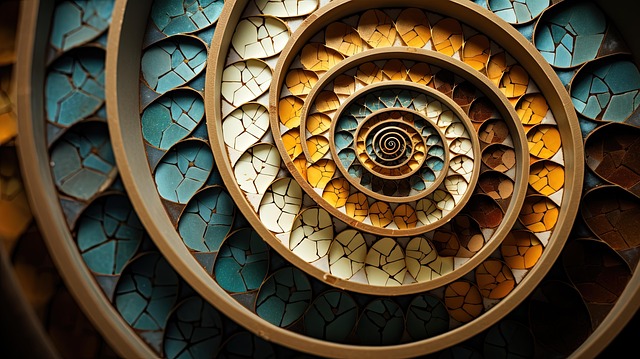
So what is The Fibonacci Sequence? The Fibonacci Sequence is a well known mathematical pattern in which each number is created by adding the two numbers that come before it. It begins with 0 and 1, and from there continues as 1, 2, 3, 5, 8, 13, and so on indefinitely. According to Lehigh University's number theory notes, the Fibonacci numbers are defined by a simple recurrence relation, meaning the rule for generating the sequence depends on previous terms. This elegant and straightforward formula is part of what makes the sequence so fascinating to mathematicians and students alike. Although commonly associated with the Italian mathematician Leonardo of Pisa, also known as Fibonacci, similar number patterns were studied as early as 200 BC in ancient mathematics. Aside from all they theoratical papers, the sequence appears naturally in the world around us, including the arrangement of leaves on trees, the spirals of seashells, and the patterns found in flowers. Its influence has even extended into architecture, design, and art, showing how mathematics and nature are deeply connected.
From the fibonacci numbers, you can mathematically calculate and produce the Golden ratio which is about 1.618. This number has many names, for example, "extreme and mean ratio" or "divine proportion" and mnay more names. Its frequent appearance in nature, geometry, and infinitely patterns like the fractal has baffled mathematicians over the years. I find this to be a very interesting and cool mathematical phenomenon. I made a a few pages that talk about who discovered it, what exactly is the golden ratio or why it's important, and the best part, how to try and calculate it by yourself.